
Where Can I Buy a Diesel Forklift With Hook Attachment?
A diesel forklift with a hook attachment can be purchased through a local forklift dealer, an online equipment marketplace, or directly from a forklift manufacturer.
The best channel depends on what you need.
If the application only requires a standard truck and locally available attachment, a dealer may be convenient. If the load is unusual, the hook position needs to be customized, or the forklift capacity must be checked at a specific load center, working directly with the manufacturer can make the technical discussion easier.
The important point is that the forklift and hook should be treated as one lifting system. Buying a forklift first and adding an unverified hook later can change the truck's usable capacity and safe operating condition.
What Is a Forklift Hook Attachment Used For?
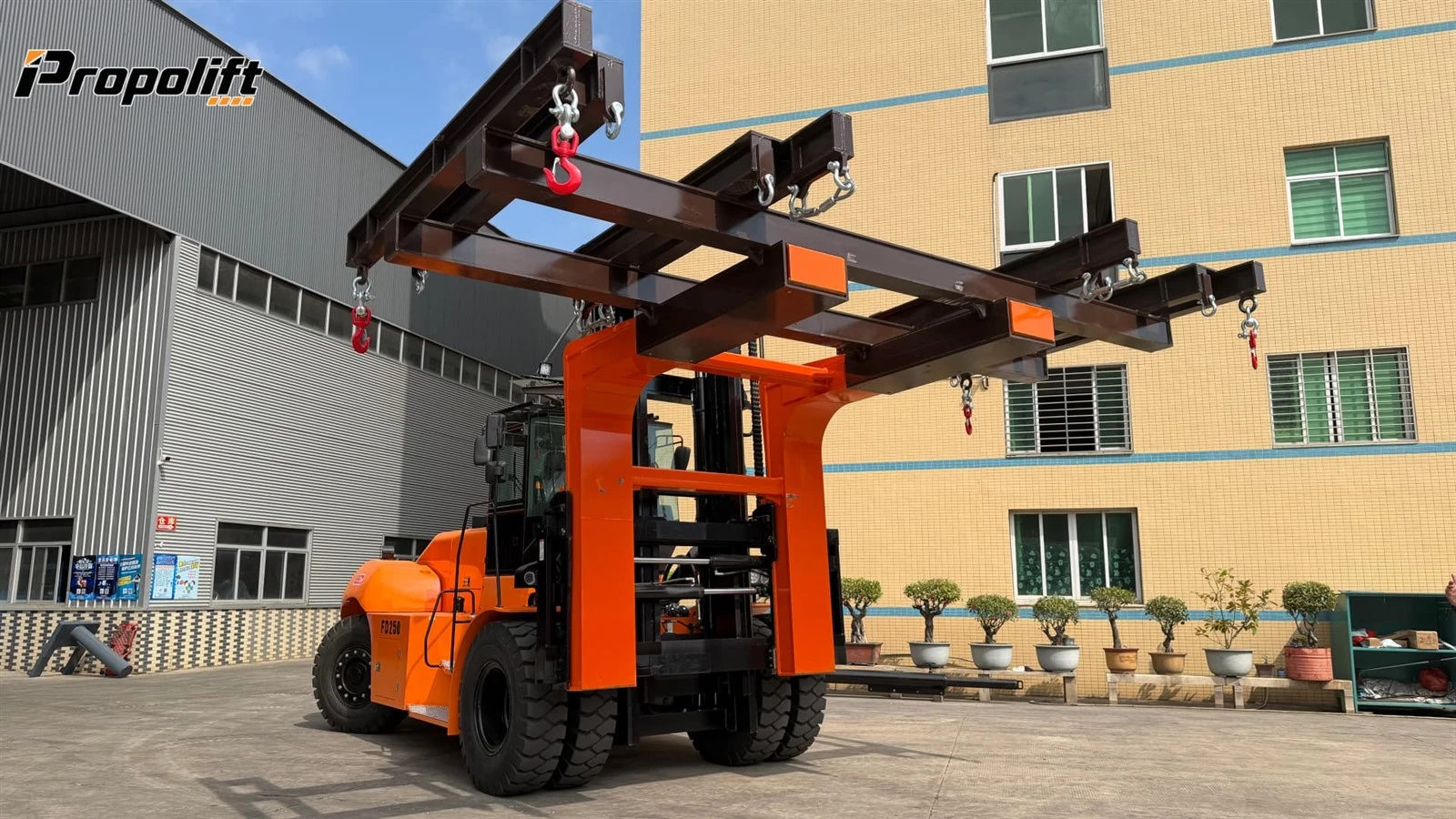
A hook attachment is useful when the load has a suitable lifting point but cannot be handled conveniently with standard forks.
Typical examples may include:
- machinery components
- molds and tooling
- steel fabrications
- precast concrete components
- industrial equipment
- other loads designed with lifting eyes or rigging points
Depending on the design, the hook may be incorporated into a dedicated attachment or lifting device connected to the forklift.
For a Diesel Forklift With Hook Attachment, the truck capacity, hook position and actual suspended load all need to be considered together.
The fact that the base forklift is rated for a certain tonnage does not automatically mean the hook can lift the same weight at every position.
Three Common Ways to Buy
1. Local Forklift Dealer
A local dealer can be a practical choice when local inspection, service and spare-parts availability are the main priorities.
The advantage is that the buyer may be able to see the machine before purchase and obtain maintenance support locally.
However, customization capability depends on the dealer and the manufacturer behind the truck. If the project requires an unusual lifting point, special hook geometry or a non-standard load center, the dealer may still need to consult the original manufacturer.
2. Online Equipment Marketplace
Online marketplaces can be useful for finding different suppliers and comparing initial offers.
They should be treated mainly as a supplier-discovery channel, not as a substitute for technical verification.
Before placing an order, check:
- who actually manufactures the forklift
- whether the hook is designed for that truck
- the rated capacity with the attachment installed
- technical drawings and dimensions
- warranty and spare-parts arrangements
- whether the supplier can provide the required documentation
A low quotation is not particularly useful if the supplier cannot confirm the capacity of the complete forklift-and-hook combination.
3. Direct From the Manufacturer
Buying directly from a manufacturer is particularly useful when the application needs to be configured around the load.
For example, the manufacturer can review the load weight, load dimensions, lifting point and required hook position before deciding whether a standard attachment is sufficient.
This approach is also useful when the project involves a heavy-duty diesel forklift, a longer reach or another non-standard handling arrangement.
The main difference is that the technical specification is discussed before production rather than trying to adapt the truck after it has already been delivered.
Why the Forklift and Hook Should Be Selected Together
A hook attachment adds its own weight to the front of the forklift and may move the load farther away from the truck.
Both factors affect capacity.
OSHA's powered industrial truck guidance notes that attachments can affect truck capacity, center of gravity, stability and visibility. It also requires capacity-related modifications and additions to be properly approved and reflected in truck markings in applicable U.S. workplaces.
This means a buyer should not ask only:
"How many tons is the forklift?"
The more useful question is:
"What is the rated capacity of this forklift with this hook, at the required load position?"
For heavy or long loads, that difference can be significant.
Purpose-Designed Hook Attachment vs. Hanging Rigging From the Forks
There is also an important difference between a proper hook attachment and simply placing slings, shackles or chains directly onto standard forks.
OSHA refers to the latter practice as free rigging when rigging equipment is attached directly to the forks for a below-the-forks lift without an approved lifting attachment. OSHA notes that this can affect the capacity and safe operation of the truck and may require manufacturer approval.
For buyers, the practical lesson is straightforward:
Do not assume that ordinary forks plus a chain are equivalent to a properly designed hook attachment.
A purpose-designed solution gives the manufacturer an opportunity to evaluate:
- attachment weight
- hook location
- load center
- structural connection
- truck capacity
- required markings and documentation
Local regulations differ by country, so the applicable safety requirements should also be checked in the destination market.
The Hook Position Can Change the Available Capacity
Hook location matters because a suspended load creates a moment around the front axle.
The farther the lifting point moves forward, the greater the load moment becomes.
OSHA's forklift stability guidance explains load center and load moment in the same way: load weight must be considered together with its distance from the truck's fulcrum. For unusual or extended loads, the allowable load may be lower than the truck's nominal rating.
This is why a customized hook should not be moved farther forward simply to gain reach without checking the resulting capacity.
If more horizontal reach is required, a dedicated lifting jib may sometimes be a more appropriate design, but the complete forklift-and-jib capacity still needs to be verified.
What Information Should You Send the Supplier?
Before requesting a quotation, six pieces of information are especially useful.
1. Maximum Load Weight
Give the heaviest load the forklift will actually lift.
2. Load Dimensions
Length, width and height help the manufacturer understand the load's center of gravity and clearance requirements.
3. Lifting Point
Provide the position of the lifting eye, shackle point or other intended rigging connection.
4. Required Lifting Height
The supplier needs to know how high the hook must reach under actual working conditions.
5. Hook Position or Working Reach
If the hook needs to extend beyond the normal fork position, provide the required horizontal distance.
6. Operating Environment
Explain whether the forklift will work indoors or outdoors, on paved or uneven ground, and whether there are space, emission or certification requirements.
Photos or drawings of the load are often useful as well, especially when the lifting point is unusual.
What Should the Supplier Confirm?
Before ordering, the quotation or technical discussion should clearly confirm more than the forklift's nominal capacity.
Useful points include:
Truck capacity and load center
Confirm the base rating of the forklift.
Hook attachment rating
The hook and its supporting structure need their own suitable working capacity.
Capacity with the attachment installed
This is more important than the truck's capacity without the attachment.
Hook position
Confirm both vertical lifting height and horizontal position.
Attachment connection
Understand how the lifting device is secured to the forklift.
Operating limitations
Any restrictions on lifting height, load position or travel should be clear before the machine is put into service.
For U.S. workplaces, OSHA requires relevant modifications affecting capacity or safe operation to receive appropriate approval and for capacity or instruction markings to be updated accordingly.
When Does Factory-Direct Supply Make More Sense?
A local dealer may be the simplest route when the truck and attachment already exist as standard products.
Factory-direct supply becomes more useful when the load itself is driving the forklift specification.
Examples include:
- an unusual lifting eye position
- oversized machinery
- a longer load center
- non-standard hook height
- special fork or attachment dimensions
- a heavy-duty application requiring configuration changes before production
In these cases, the discussion should begin with the load rather than with a list of forklift options.
For Propolift projects involving specialized handling, we prefer to review the load weight, dimensions, load center and required handling method before the final forklift and attachment configuration is confirmed.
So, Where Should You Buy One?
There is no single purchasing channel that is best for every project.
A local dealer can be useful when local service is the priority.
An online marketplace can help identify and compare suppliers.
A direct manufacturer is often worth considering when the forklift and hook need to be engineered around a specific load.
Whichever route you use, do not compare quotations only by forklift tonnage and price.
For a diesel forklift with a hook attachment, the better comparison is whether each supplier can clearly show how the hook is connected, where the load will be suspended, and what capacity remains under that exact condition.
That is the information that determines whether the machine is actually suitable for the job.
References
- U.S. Occupational Safety and Health Administration (OSHA) - Powered Industrial Trucks: Attachments. Guidance on attachment effects on capacity, center of gravity, visibility, truck markings and manufacturer approval.
- OSHA - Forklifts: Free Rigging Requires Manufacturer Approval. Guidance distinguishing free rigging from approved lifting attachments and explaining its effect on forklift capacity and safe operation.
- OSHA - 29 CFR 1910.178, Powered Industrial Trucks. Requirements concerning capacity-affecting modifications, front-end attachments, markings and rated capacity.
- OSHA - Stability of Powered Industrial Trucks, Appendix A to 29 CFR 1910.178. Technical explanation of load center, load moment and forklift stability with unusual or extended loads.
- OSHA - Powered Industrial Truck Modifications and Approval. Guidance concerning manufacturer or qualified-engineer approval when an attachment or modification affects capacity or safe operation.
- Propolift Machinery - Diesel Forklift With Hook Attachment Technical Specifications. Manufacturer reference for forklift, hook and application configuration.