


Duplex vs Triplex Forklift Mast: What Is the Difference?
Customers sometimes ask us directly:
"Can you use a triplex mast?"
Usually we first ask another question:
What lifting height and overall height restriction do you actually have?
A triplex mast is not automatically better than a duplex mast.
For heavy duty forklifts, the correct mast depends on the load, working height and space available around the truck.
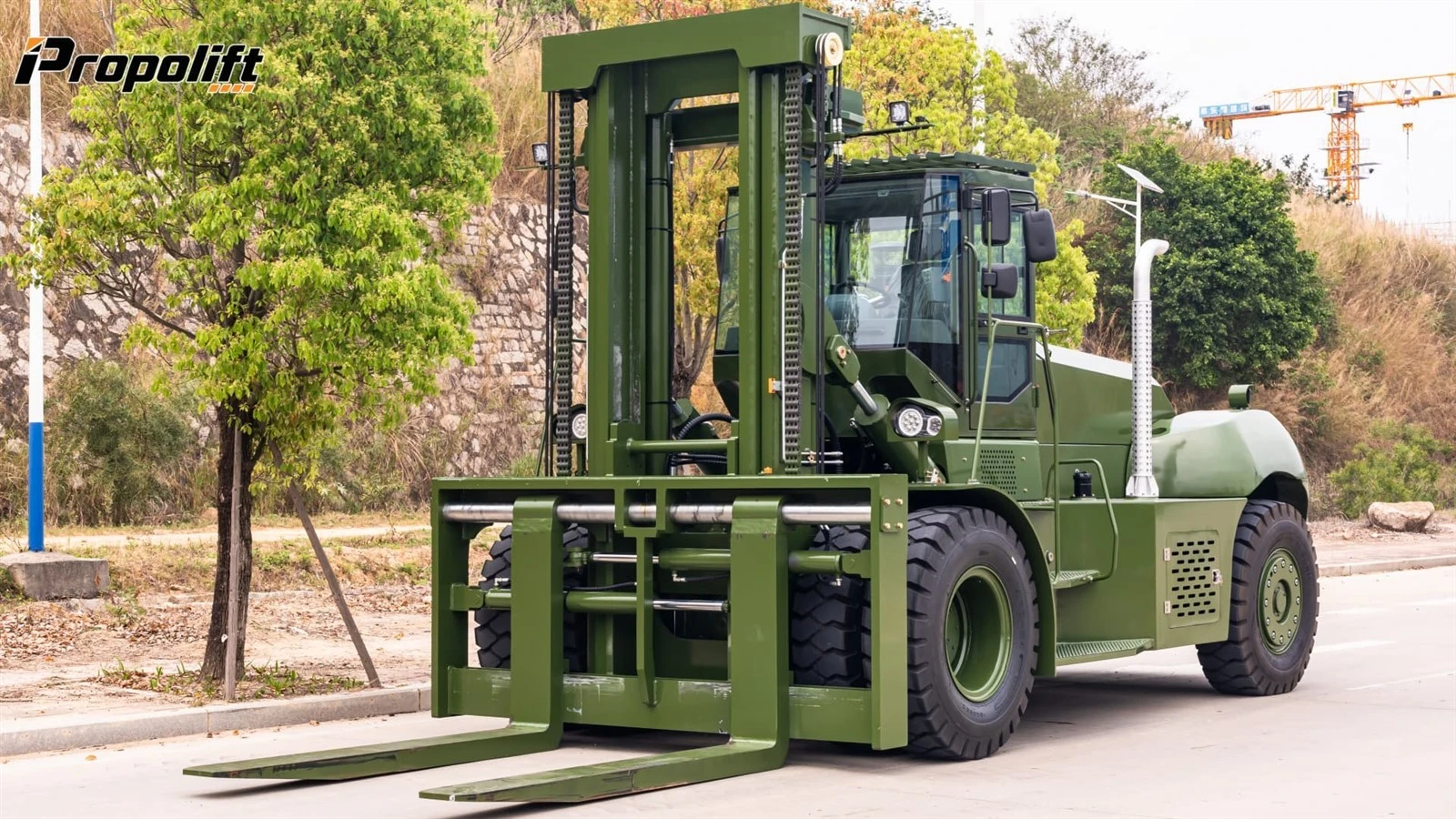
What Is a Duplex Mast?
A duplex mast uses two mast stages.
For many heavy-duty applications, it is the simplest and most practical solution.
A duplex mast is commonly used where:
- Lift height is moderate
- There is enough overhead clearance
- Full free lift is not the main requirement
- The forklift handles very heavy loads
The structure is relatively straightforward, which is one reason duplex masts are common on large-capacity forklifts.
What Is a Triplex Mast?
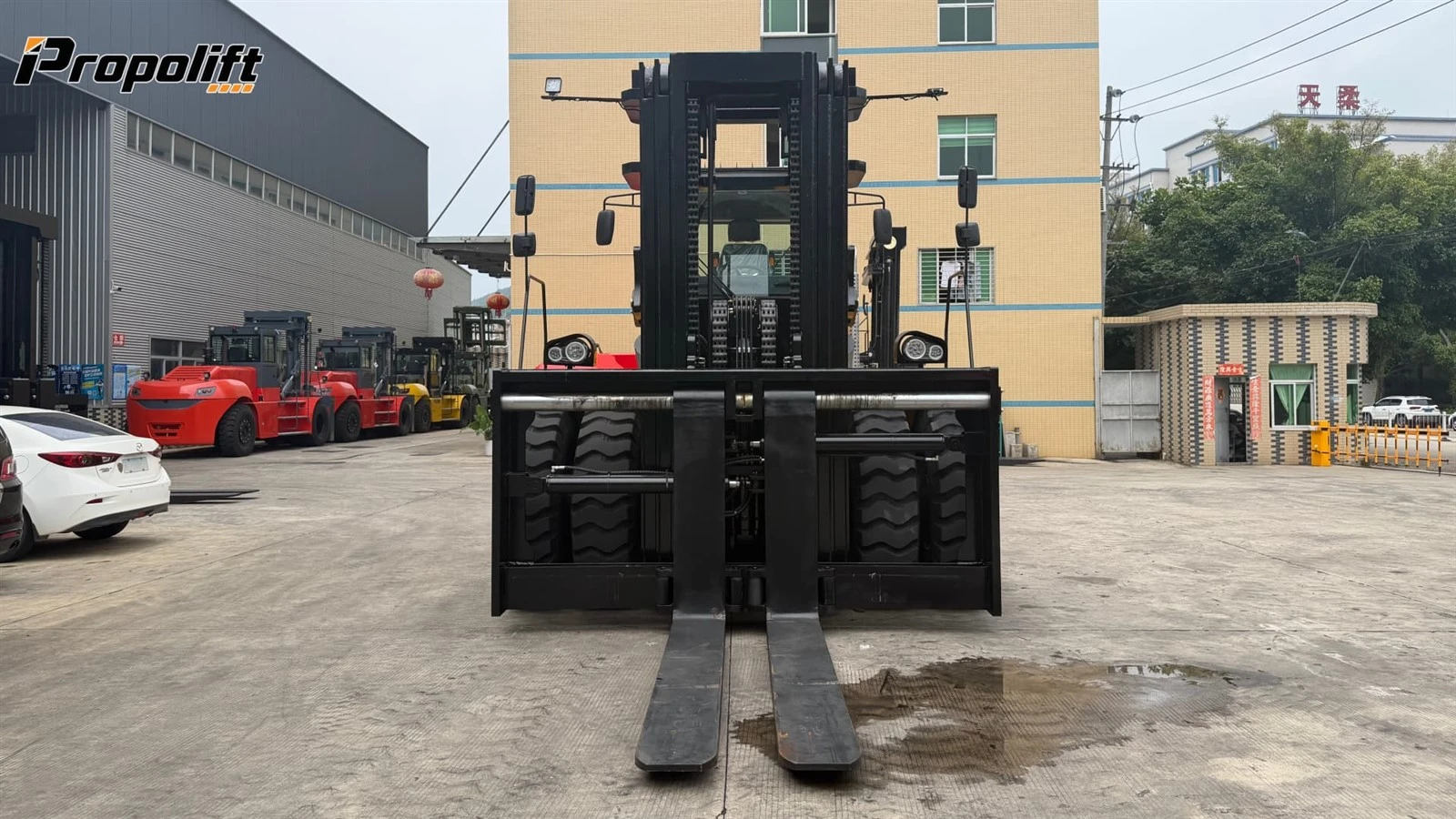
A triplex mast uses three mast stages.
Its main advantage is that it can provide a higher lift while keeping the mast relatively compact when lowered.
This is useful when the forklift needs to pass through a low entrance but later lift the load much higher.
For example:
The forklift may need to pass through a 2.8-meter doorway but lift the load to 5 meters once inside.
In this case, mast closed height becomes just as important as maximum lift height.
Why Triplex Is Not Always Better
Customers sometimes assume:
More mast stages = better forklift.
That is not how we look at it from the factory.
If the required lifting height is only 3 meters and the working area has no height restriction, a duplex mast may already do the job very well.
Using a more complex mast without a practical reason can add:
- Weight
- Cost
- More moving components
- Different visibility characteristics
The mast should match the application rather than simply offering the largest possible specification.
What Is Free Lift?
Free lift means the forks can rise while the mast itself remains at approximately the same overall height.
This matters in confined areas.
For example, a forklift working inside a container may need to lift the cargo slightly before moving it, but the mast cannot extend upward because of the container roof.
Free lift can also matter in:
- Low workshops
- Trailers
- Warehouses with restricted doorways
- Indoor loading areas
For some applications, free lift is more important than the final maximum lifting height.
Heavy Loads Need More Care
On a small warehouse forklift, changing from a duplex to a triplex mast may be relatively routine.
On a 20-ton or 30-ton forklift, mast selection is much more closely connected with truck structure and capacity.
The mast needs to handle:
- Load weight
- Load center
- Carriage weight
- Fork weight
- Hydraulic forces
- Required height
This is why we normally confirm the actual operating condition before recommending a mast configuration.
Lift Height and Load Center Should Be Checked Together
Suppose a customer needs to lift 16 tons to 5 meters.
We still need to know:
At what load center?
A compact 16-ton load and a long 16-ton load do not create the same working condition.
When higher lift and longer load center are combined, the capacity requirement becomes more demanding.
The mast cannot be selected separately from the cargo.
Lowered Mast Height Is Often Forgotten
Most buyers know the maximum lift height they need.
Fewer know the maximum mast height they can accept when the mast is lowered.
Before ordering, measure:
- Doorway height
- Ceiling height
- Container height
- Workshop entrance
- Overhead pipes or beams
These dimensions can determine whether a duplex or triplex mast is more suitable.
A Practical Example
Imagine two customers who both require 5-meter lift height.
Customer A
Works in an open outdoor yard with no height restriction.
Customer B
Needs to enter a low factory building before lifting the load.
The final lifting height is the same.
The most suitable mast may not be.
That is why "5-meter mast" alone is not enough information.
What Should You Tell the Manufacturer?
For mast selection, provide:
Maximum load weight
Load center
Required maximum lift height
Maximum allowable lowered mast height
Required free lift
Fork and attachment configuration
With this information, the manufacturer can recommend a mast around the real working condition.
Final Thoughts
The main difference between duplex and triplex masts is not simply the number of stages.
For the buyer, the important questions are:
How high does the load need to go?
How low must the mast be when traveling?
Is free lift required?
Once these are clear, the mast type becomes much easier to determine.
References
1. Toyota Material Handling - Selecting the Right Forklift Mast
Explains duplex and triplex mast structures and compares lift height, lowered mast height and free-lift requirements.
2. OSHA - Critical Forklift Measurements
Covers overall lowered height, free fork height, maximum fork height and overhead-clearance considerations in confined spaces.
3. Hyster - Mast and Capacity Information
Provides published examples showing how mast type, free lift, lowered height and load capacity vary by configuration.