


Why Heavy Duty Forklifts Use Different Wheel And Tire Configurations
As forklift capacity increases, the machine must support much greater weight at the front axle.
This is why heavy duty forklifts often use different wheel arrangements from smaller warehouse forklifts.
The wheel and tire configuration is selected according to the forklift capacity, axle load and intended working conditions.
Why The Front Axle Carries More Weight
When a forklift lifts a heavy load, much of the combined weight is transferred toward the front axle.
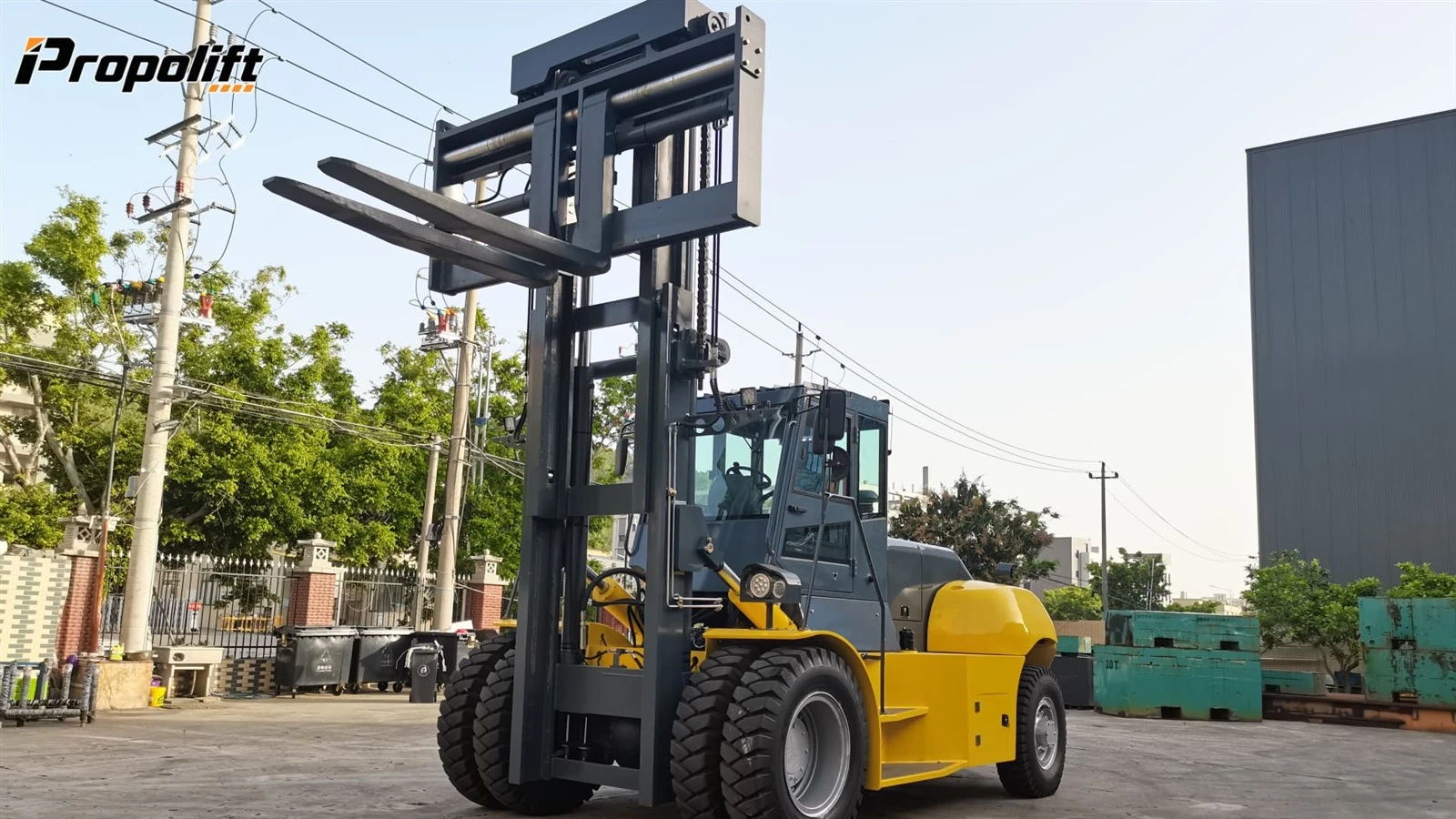
For large-capacity models, using multiple front tires helps distribute this load over a larger contact area.
This is why many heavy duty forklifts use four tires on the front axle rather than two.
The rear axle generally carries less load and is also responsible for steering, so a different tire arrangement may be used there.
More Tires Do Not Simply Mean More Capacity
The number of tires is only one part of the design.
The complete configuration also depends on:
- axle capacity
- tire size
- tire rating
- forklift weight
- load center
- chassis design
A forklift should not be judged only by the number of wheels visible from the outside.
The entire machine needs to be designed for the required load.
Ground Conditions Still Matter
Tire configuration also affects ground pressure and operating stability.
For forklifts working in steel yards, ports or outdoor industrial sites, we need to consider:
- floor strength
- surface condition
- sharp debris
- uneven ground
- travel distance
The correct tire type and axle arrangement should match both the machine capacity and the worksite.
Configuration Changes With Forklift Size
A 12 ton forklift and a 40 ton forklift do not carry the same axle loads, even if they perform similar material-handling tasks.
As capacity increases, tire dimensions and wheel arrangements may change accordingly.
At Propolift, wheel and tire configuration is selected as part of the complete forklift design rather than treated as a cosmetic specification.
For heavy duty equipment, what matters is how effectively the machine distributes and controls the working load.